
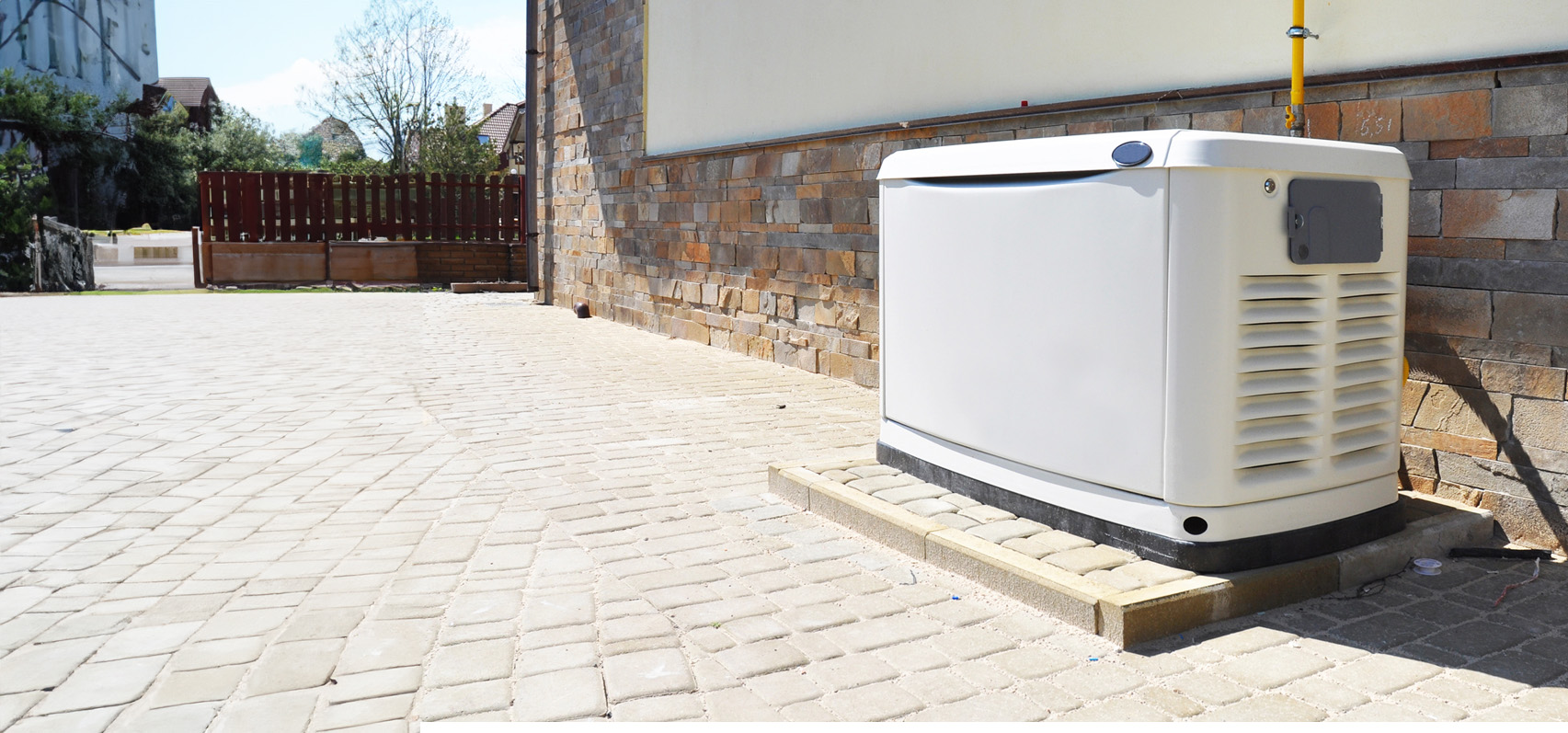
Ice storm, windstorm, extended outage: when the power goes out, a standby generator keeps your home warm, your basement dry and your fridge full. Here’s how to choose and install it right.
In Quebec, winter doesn’t forgive
A few hours without power is an inconvenience; several days in an ice storm can freeze pipes, flood a basement and empty a freezer. A standby generator, properly sized and properly installed, keeps you covered.
Manual or automatic?
Manual system
Using a manual transfer switch, you switch over to the generator (often portable) yourself when the outage hits. Economical, but requires you to be there.
Automatic system
A fixed generator that starts on its own within seconds, fueled by natural gas or propane. Nothing to do — even when you’re away.
Installed ranges, for reference. The right choice depends on your budget and the peace of mind you want.
How many kW? It depends what you want to keep running
Power really varies with your needs — from the essentials (backup heat, fridge, lighting, sump pump) to the whole house. In practice, we’re usually talking 14 kW to 28 kW.
The transfer panel: mandatory, and vital
Whether the system is manual or automatic, the transfer panel (or switch) is mandatory. It isolates your house from the grid while the generator runs.
Maintenance matters
A standby generator is only useful if it starts when needed. For a Generac, maintenance is due every 2 years or every 200 hours of use, whichever comes first.
Permit, startup and inspection
- Permit: it really depends on the municipality — we check what applies to you.
- Professional startup: at commissioning, we do a complete inspection of every element to make sure the installation is compliant, safe and ready to serve at the next outage.
Peace of mind, even in the dark
CMEQ-certified company holding an RBQ licence, serving Greater Montréal, Laval, the North Shore, the Laurentians and Lanaudière. We size it, install it by the book and commission it.
Stop dreading the next outage
We assess your needs and propose the right generator, installed by the book. Free quote.
What homeowners ask us
Manual or automatic generator?+
Manual ($2,000–$4,000) requires you to switch over yourself at the outage. Automatic ($15,000–$25,000) starts on its own within seconds. The choice depends on budget and desired peace of mind.
How much power (kW) do I need?+
From 14 to 28 kW depending on what you want to power. With a furnace or electric heating, aim for 18 kW and up.
Can I hook up a generator myself?+
No. A transfer panel (mandatory) is essential: a homemade hookup can send current back into the Hydro-Québec grid and endanger line workers’ lives.
How often should it be maintained?+
For a Generac, every 2 years or 200 hours of use, whichever comes first.
Is a permit required?+
It depends on the municipality — we check for you. Our startup includes a complete inspection of the installation.
