
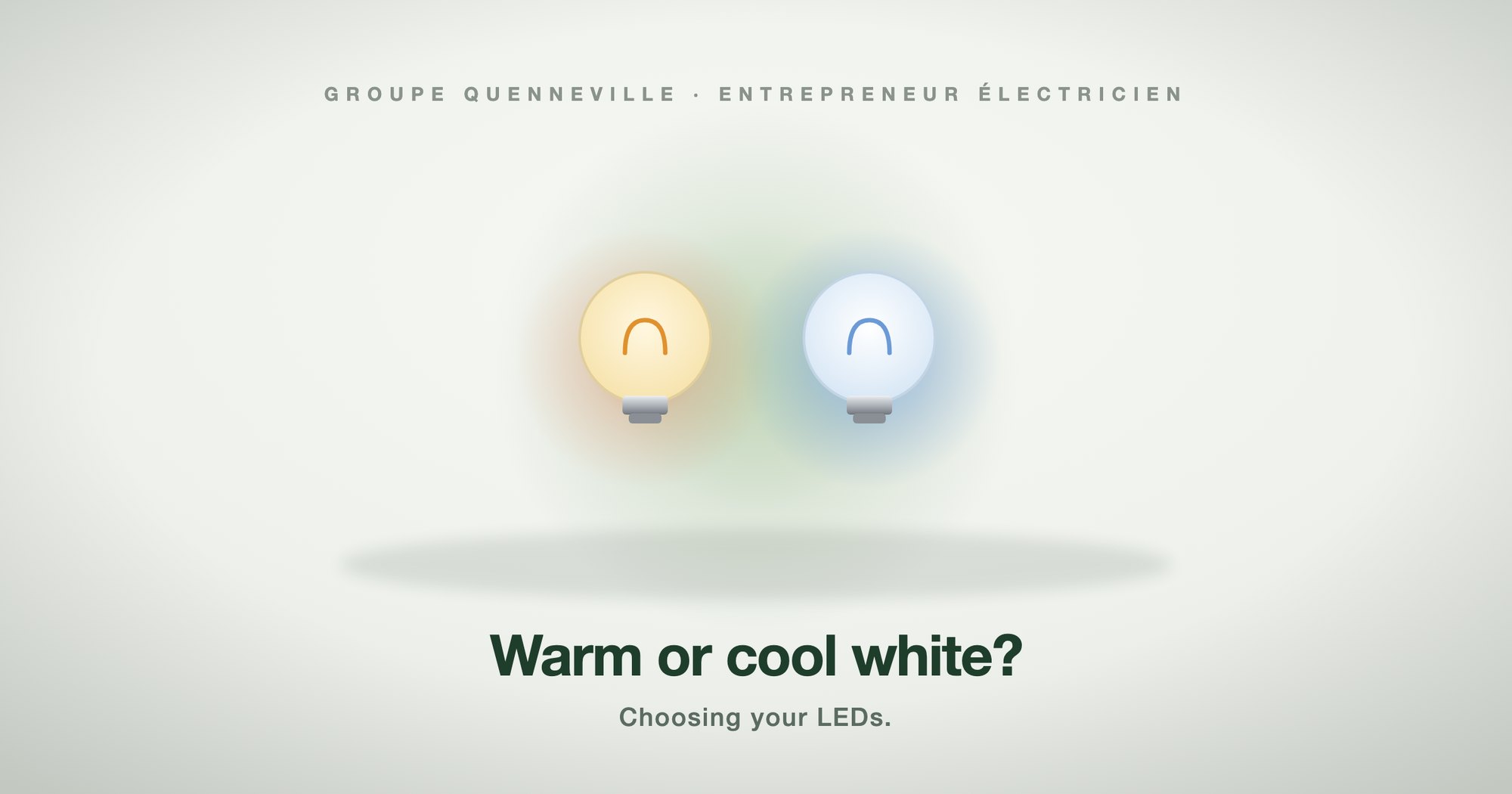
You used to buy “a 60-watt” and that was that. Today, the bulb aisle makes your head spin — and you often leave with the wrong tone. Yet three numbers are all it takes to never get it wrong again.
The bulb aisle that gives you a headache
You used to buy “a 60-watt” and it was settled. Today, the bulb aisle overflows with numbers — lumens, Kelvin, watts, CRI — and you often leave with the wrong tone, the one that makes the living room icy or the kitchen yellowish. Yet three numbers are enough to never get it wrong again. Here’s the simple guide, room by room.
The 3 numbers that matter
Remember these, ignore the rest.
Lumens = brightness
The real measure of brightness. Benchmarks: 800 lm ≈ old 60 W, 1,100 lm ≈ 75 W, 1,600 lm ≈ 100 W. More lumens = more light.
Kelvin = the mood
The tone of white, from warm (yellow, cozy) to cool (bluish, clinical). It’s the number that changes everything — and the one most often missed.
Watts = energy
With LED, watts no longer measure brightness, only consumption — now tiny. Don’t judge brightness by watts anymore.
Kelvin: warm, neutral or cool
The Kelvin (K) scale runs from warm white to cool white. Here’s how to read it:
2700 K — Warm white
The golden, warm glow of the old incandescent bulb. Cozy, restful. Living room, bedrooms, dining room.
3000 K — Soft white
A warm white that’s slightly crisper, without turning yellow. Kitchen, bathroom, hallways.
3500-4000 K — Neutral white
A clean, energizing white, close to daylight without being cold. Office, laundry, garage, workshop.
5000 K+ — Cool / daylight white
A bluish, very clinical white. Great for precise tasks and the basement, but icy in a living space.
Which tone for which room
The shortcut our electricians give most often.
- Living room, bedrooms, dining room: 2700 K (warm white) — for mood and comfort.
- Kitchen, bathroom: 3000 K — warm enough to feel welcoming, crisp enough to see what you’re doing.
- Office, laundry room: 3500-4000 K — a white that keeps you alert.
- Garage, workshop, basement, reading/sewing corner: 4000-5000 K — for precision.
- Outdoors: 3000 K for a warm welcome, 4000 K+ for security and floodlights.
Don’t get caught out
- Consistency above all. Mixing 2700 K and 4000 K in one room (or between rooms you can see at once) creates an incoherent effect, one looking “dirty” next to the other. Pick one tone and stick to it.
- CRI (colour rendering index). Aim for 80 minimum, 90+ ideally. A good CRI renders colours and skin tones naturally — crucial in the bathroom and kitchen.
- “Dimmable” if you have a dimmer. An LED not made for it will flicker or buzz (we explain it in our guide “My lights are flickering”).
- A certified brand (cUL, CSA, ENERGY STAR). Low-end bulbs burn out early and render colours poorly.
Good lighting is designed
Choosing the right bulb settles 80% of comfort. For the rest — a living room short on sources, a kitchen poorly lit at the counter, a dull basement — it’s the lighting plan that makes the difference: recessed lights (pot lights) well distributed, under-cabinet lighting, dimmers in the right places, circuits designed to create moods. That’s where an electrician adds the most value.
Great lighting is designed
A CMEQ-certified company holding an RBQ licence, serving Greater Montreal, Laval, the North Shore, the Laurentians and Lanaudière. We install recessed lights, fixtures and dimmers, and design a room-by-room lighting plan — with the right tone the first time.
Want lighting that measures up?
Recessed lights, dimmers, custom lighting plan. We advise the right tone in your quote.
What people ask us
Warm white or cool white: which should I choose?+
Warm white (2700 K) for rooms where you relax — living room, bedrooms, dining room — since it creates a cozy mood close to the old bulb. Neutral to cool white (4000 K and up) for rooms where you work — office, garage, workshop, basement — since it keeps you alert and lights precise tasks. Kitchen and bathroom sit well at 3000 K.
What are Kelvin on a bulb?+
Kelvin (K) indicate the colour temperature, that is the tone of white. The lower the number, the warmer and more yellow the light (2700 K); the higher, the cooler and more bluish (5000 K and up). It’s the number that sets a room’s mood, and the one most often chosen wrong.
How many lumens to light a room well?+
Lumens measure brightness. As benchmarks: 800 lumens equal an old 60 W bulb, 1,100 lumens a 75 W, and 1,600 lumens a 100 W. For a whole room, you add up the sources; a comfortable living room usually combines several light points rather than one very powerful bulb.
Why don’t watts mean anything anymore?+
Because with LED, watts only measure energy used, now very low, not brightness. A 9 W LED can light as much as an old 60 W bulb. To judge brightness, rely on lumens; for mood, on Kelvin; watts now only help estimate your energy savings.
Can I mix warm white and cool white in my home?+
Better to avoid it within one room or between rooms visible from each other: the tones “dirty” each other and the effect looks incoherent. Choose a clear logic — warm for living spaces, neutral or cool for work spaces — and keep the same tone within each zone.
What is CRI and why does it matter?+
CRI (colour rendering index) measures how faithfully a bulb renders colours, out of 100. Aim for at least 80, ideally 90 and up, especially in the bathroom and kitchen where you want natural skin tones and food. A low-end bulb with a low CRI gives a dull rendering.
Do all LEDs work with a dimmer?+
No. Only bulbs marked “dimmable” are designed for dimmers. An ordinary LED on a dimmer will flicker, buzz or dim poorly. You also need an LED-compatible dimmer. Check the label and favour the same brand for all bulbs on one dimmer.
Can an electrician help me choose my lighting?+
Yes. Beyond the bulb, an electrician designs a real lighting plan: recessed lights well distributed, under-cabinet lighting, dimmers and circuits designed to create moods. At Groupe Quenneville, we install recessed lights and dimmers ($150 travel plus $140/hr) and advise the right tone free in your quote.
