

Commander Electrical Panel.
Do You Really
Need to Replace It?
Does your home have a « Commander », « Federal Pioneer » or « Stab-Lok » breaker panel? Here’s what we actually know — no scare tactics, nothing hidden — and how to tell whether you need to act.
Commander, Federal Pioneer, Stab-Lok: one family under scrutiny.
« Commander » is one of the panel and breaker brands found in Quebec homes built between the 1960s and the 1990s. It’s generally grouped with Federal Pioneer and Stab-Lok breakers — the Canadian version of an American design (Federal Pacific / FPE) that generated plenty of controversy. What ties this family together: a breaker mechanism whose reliability at tripping has been called into question. That detail — not the panel’s looks — is why inspectors and insurers pay attention. (Homes from this era often also have aluminum wiring — a related topic we cover in a dedicated article.)
The real risk: a breaker that doesn’t « trip ».
A breaker has one vital job: cut the power when a circuit is overloaded or shorts out. It’s your safety net against overheating and fire.
The concern with Stab-Lok–type breakers is exactly there: under certain conditions, they can stay in the « ON » position instead of tripping. Current keeps flowing, the wiring heats up, and the fire risk climbs. Independent testing over the years has found abnormally high failure-to-trip rates — often cited around 1 breaker in 3, and higher in some tests. Key point: a panel can look perfectly normal, have never « given trouble », and still carry this risk, because the flaw is internal and invisible to the eye.
Where the reputation comes from
This isn’t a forum rumour. In the U.S., the maker behind the design (Federal Pacific Electric) falsified UL certification testing between 1971 and 1980 — a fact established by a New Jersey court in 2002. In Canada, the equivalent brand, Federal Pioneer, was later taken over by Schneider Electric. One important nuance, for honesty’s sake: the official Canadian recall was very narrow (specific 15-amp breakers made in 1996-1997), not a recall of the whole product line. So there’s no « mass recall » that makes your panel illegal overnight — but the safety concern is real and documented.
No law forces your hand. Here’s the full truth.
Let’s be honest: no BNQ or CMEQ standard officially declares a Commander or Federal Pioneer panel « obsolete ». A panel that’s been inspected, is in good condition and works properly does not have to be replaced « on principle ».
Age
An electrical panel typically lasts about 30 to 40 years. Most of these panels have now passed that mark.
Documented doubt
The tripping reliability of these breakers has been questioned by independent testing over several decades.
Insurer pressure
More and more insurers flag these panels and may require an inspection or a replacement (next section).
Our approach at Groupe Quenneville: inspect first, recommend second. No fear sold by the piece.
The signs that should get your attention
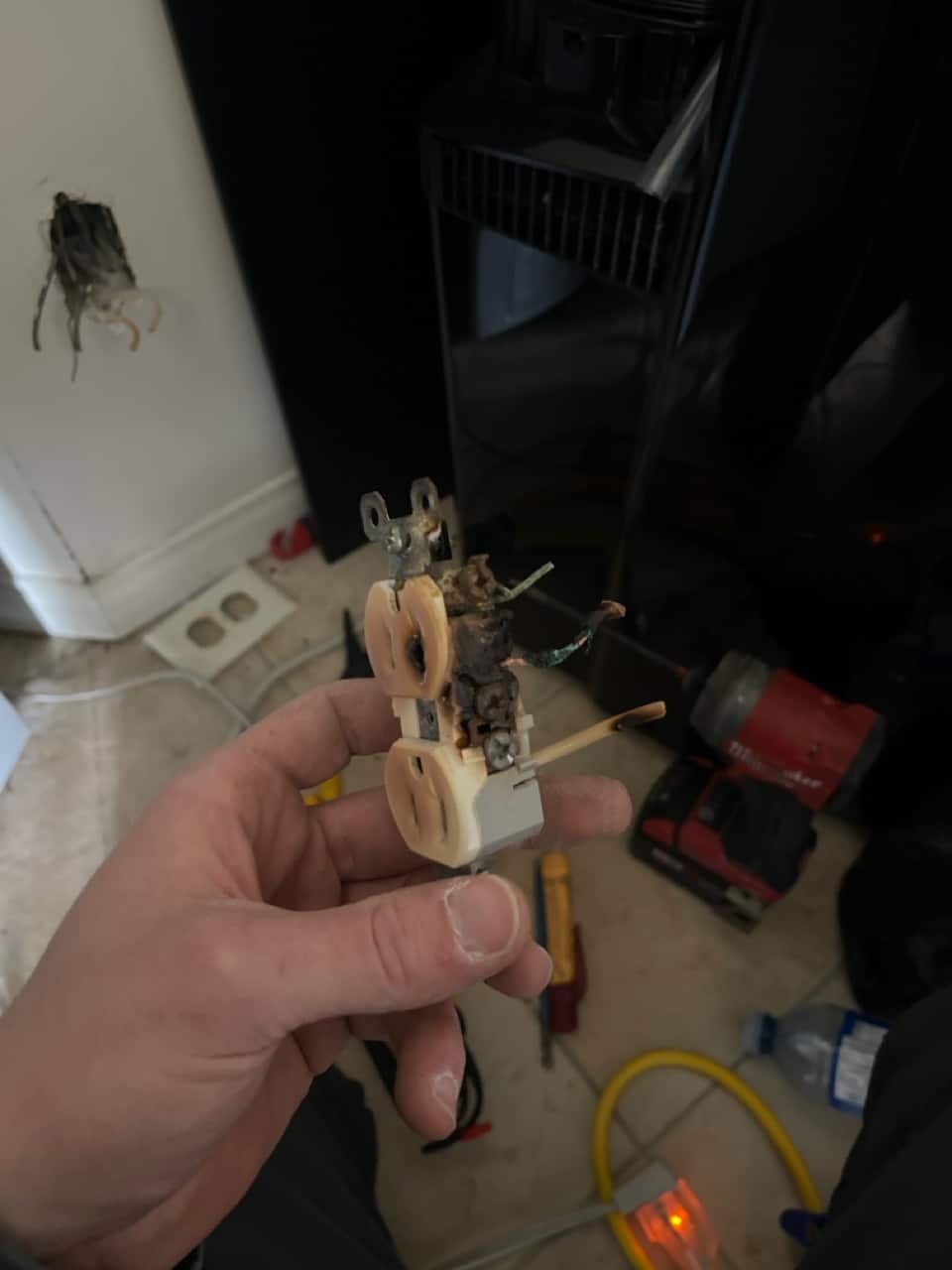
Some clues warrant a quick check. But be careful: the absence of symptoms guarantees nothing — the flaw in these breakers is often invisible.
Why your insurer cares
This is often how the topic lands on your kitchen table. More and more Quebec insurers flag these panels when writing or renewing a policy. Depending on the company, that can mean a required inspection by an electrician, proof of replacement within a set deadline, a surcharge, or even a refusal of coverage while the panel is in place. A modern, compliant panel, on the other hand, reassures your insurer — and protects your home’s resale value.
Two paths, depending on what the inspection reveals.
Monitor
If the inspection shows no sign of overheating, corrosion or breaker/wiring mismatch, and the panel works properly, periodic monitoring may be enough. We’ll tell you straight, without pushing you toward needless work.
Replace
As soon as there’s a worrying sign — or your insurer requires it — we replace the panel with a modern electrical service (often 200 A), with certified breakers and compliant grounding. A routine, clean job, done in a single day in most homes.
What a typical replacement includes
Meticulous work, carried out by our team of qualified electricians, to code and following CMEQ and RBQ guidelines.
| Step | Included |
|---|---|
| Inspection and diagnosis of the existing panel | ✔ |
| Supply and installation of a modern service (e.g. 200 A) | ✔ |
| Certified breakers + compliant grounding | ✔ |
| Basic circuit identification | ✔ |
| Permit and coordination with Hydro-Québec as needed | ✔ |
| Groupe Quenneville 5-year warranty | ✔ |
Every home is different — the panel’s location, the target amperage and the state of the wiring all move the price. As a rough guide only, replacing a panel with a 200 A service in Quebec generally runs in the low-thousands of dollars. The only way to get a real number is a free quote after we’ve seen your installation.
A company your insurer recognizes
A residential, commercial and industrial electrical company — CMEQ-certified and holding an RBQ licence — serving Greater Montréal, Laval, the North Shore, the Laurentians and Lanaudière. We support you from A to Z: inspection, honest recommendation, work done to code, and a proper compliance certificate.
Unsure about your panel? Let’s look at it together.
Before you worry — or let an insurer decide for you — get a real diagnosis. Request your free quote today.
What homeowners ask us
Is a Commander panel illegal or banned in Quebec?+
No. No CMEQ or BNQ standard declares it « obsolete » or illegal. This is a safety matter and, often, an insurance requirement — not a regulatory ban.
My panel has never caused a problem. Am I really at risk?+
The flaw attributed to this family of breakers is internal and not visible: an installation can look perfectly normal and still carry the risk that a breaker won’t trip at the right moment. Only an inspection can settle it.
Can I just replace the breakers without changing the panel?+
Rarely a good idea. Because the doubt is about the tripping mechanism itself, and these panels are often near end of life, full replacement with a modern service is usually the safest, longest-lasting solution.
Can my insurer really refuse to cover me?+
Some insurers ask for an inspection, require replacement within a deadline, apply a surcharge, or decline coverage while the panel is in place. Policies vary by company — check yours, and keep proof of the work.
How long does replacement take?+
In most homes, replacing the panel with a modern service takes a single day, with a short, planned power interruption.
Is there a recall on Commander electrical panels?+
There is no official recall — from the manufacturer or a government body — that forces you to remove a Commander panel. The brand is simply no longer manufactured or certified for new installations. Replacing it is a matter of safety and insurance requirements, not a regulatory recall.
Is a Commander panel still CSA-certified, or considered “non-compliant”?+
These panels are no longer CSA-certified or produced today, but a panel already in place isn’t automatically labelled “non-compliant” by the Code. It’s usually during an inspection, a sale, or an insurance request that replacement becomes required. An inspection by our qualified team clarifies your situation.
